
Floating Ball Valve
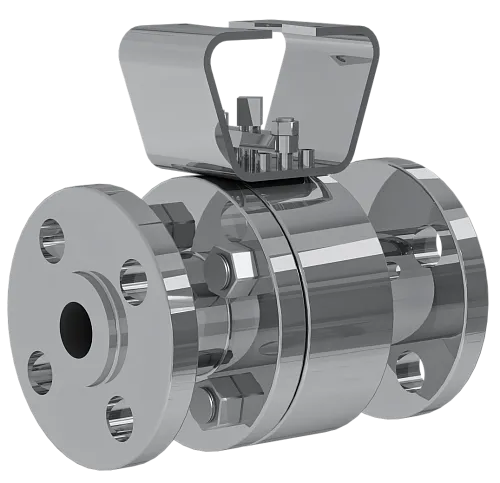

Technical specifications
-
Nominal diameter DN 15 to 200 mm
-
Type of connection flanged / welded
-
Nominal pressure PN 1,6 to 42 MPa
-
Operating temperature - 196 to 400 °C
-
Material of the body carbon steel / cold-resistant steel / heat-resistant steel / stainless steel / corrosion-resistant alloys
-
Actuator pneumatic, piston / electric / manual
-
Seat type soft seal / metal-to metal seal
-
Leakage class А according to GOST 9544-2015
-
Standard design blow-out proof stem / antistatic device / bidirectional flow
-
Type of construction floating ball
-
Type of bore full-bore / reduced bore
Execution options


For hydrogen sulfide service
In accordance with the requirements of the NACE MR 0103/01-75 standard for media containing hydrogen sulfide
Fireproof design according to API 607
The valve complies with API 607 requirements, which ensures that it remains tight when exposed to an open flame. After the soft seals burn out, the metal sealing remains in place, ensuring the protection of equipment and personnel in emergency situations.
With a steam jacket heating
To maintain the temperature of the working medium inside the valve. The steam jacket ensures uniform heating of the body, preventing thickening or crystallization of viscous or temperature-sensitive fluids, and also reduces the risk of condensate formation. It is used in systems with high medium viscosity or in low-temperature environments.
Cryogenic design
The design is adapted for operation at temperatures up to -196 °C and below. The extended bonnet and special materials prevent the seals from freezing and ensure reliable tightness during cryogenic temperature changes.
Features

-
A pressure balancing hole in a ballA pressure balancing hole in a ball to equalize pressure on both sides of the ball within the valve
-
Low torqueMinimum time required to rotate the valve
-
Simple shape of the wet partSimple shape of the wet part and the absence of stagnant zones in it
-
CoatingBall/seat coating: tungsten carbide, stellite, chromium nitride, chromium carbide